

PanARMENIAN.Net - The TRIPP project (the Trump Route for International Peace and Prosperity) is seen as a key component of the Armenia-Azerbaijan peace process, and difficulties in implementing it could negatively affect relations between the two countries, experts told BBC.
Armenian Prime Minister Nikol Pashinyan warned that the implementation of the TRIPP project could be delayed because of the war against Iran launched by the United States and Israel.
According to Pashinyan, the project is currently not a priority for Washington.
"You see what is happening and what they are busy with. Unfortunately, it is very likely that this will affect the implementation of TRIPP in terms of timing, because the U.S. government is focused on another issue. However, if it turns out that it will not affect it, that would be good," Pashinyan said on March 12.
The proposed route would pass through Armenian territory, connecting mainland Azerbaijan with its Nakhichevan exclave.
The project has been presented as a compromise solution: Baku would gain unobstructed access to Nakhchivan, while Yerevan would retain sovereignty over the territory through which the corridor runs.
However, the route is expected to run along the Araks River, which forms the border between Armenia and Iran.
This region is an important trade hub for Tehran, and Iranian companies are already carrying out road construction works in areas where the route could pass. The Iran-Armenia gas pipeline also runs through the same area.
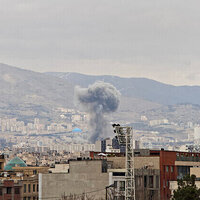
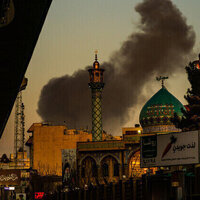
The war against Iran launched by the United States and Israel has been ongoing for nearly two weeks.
In response, Iran has struck not only Israel and U.S. military bases in the region but also Gulf states.
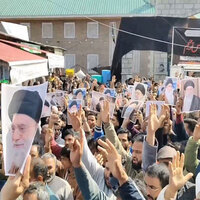
Despite their strategic ties with Washington, both Armenia and Azerbaijan have refrained from supporting the war. Leaders of both countries also expressed condolences following the death of Ayatollah Ali Khamenei and congratulated his son Mojtaba Khamenei after he was chosen as Iran's new Supreme Leader.
According to Konul de Mory, an expert from the International Crisis Group, the U.S.-Iran war could make the TRIPP project more controversial from Iran's perspective, though that does not necessarily mean it will be halted.
"The war between the U.S. and Iran will almost certainly make the TRIPP project far more controversial for Iran, but that does not automatically mean the initiative will stop. If the project is delayed or canceled, it could complicate the peace process between Baku and Yerevan," she told BBC.
Construction of the TRIPP route is expected to begin this summer.
Earlier this year, the United States and Armenia presented a framework plan for the project that envisages creating a company under U.S. government oversight.
The company would be responsible for building railways, highways and infrastructure and operating them for at least 49 years.
Back in August 2025, Ali Akbar Velayati, adviser to Iran's former Supreme Leader Ali Khamenei, warned that an increased U.S. presence near Iran's border could turn the future route into a "graveyard for Trump's mercenaries."
At the same time, Armenian diplomats have attempted to convince Iranian officials that the project does not threaten Iran's interests.
According to Tigran Grigoryan, director of the Regional Center for Democracy and Security in Yerevan, there had previously been some positive movement in this regard.
He said Iran's position may now harden, but that does not necessarily mean the project will be blocked.
"The question is what tools Iran actually has to stop the project. I believe it will mostly be limited to political statements," he said.
Joshua Kucera, senior analyst for the South Caucasus at the International Crisis Group, also noted that delays or cancellation of TRIPP could have serious implications for the Armenia-Azerbaijan peace process.
According to him, the war against Iran has actually increased Azerbaijan's need for a route through Armenia.
Trade routes through Iran have been disrupted, and Nakhichevan airport was temporarily closed after a strike involving an Iranian drone.
Baku said Iranian drones hit the airport, while Tehran blamed Israel for the attack.
Analysts say the active involvement of the White House in the South Caucasus has been an important factor behind recent progress in Armenia-Azerbaijan relations.
Both countries' leaders previously highlighted Donald Trump's "historic role" in efforts to end the conflict.
"If the perception emerges that this issue is no longer important for the United States, the situation could become much more fragile," Kucera said.
At the same time, de Mory believes the peace process could continue even without strong U.S. involvement.
According to her, the text of a peace agreement has already been agreed in the past year, although it has not yet been signed.
In addition, Azerbaijan has begun exporting gasoline and diesel fuel to Armenia, developments achieved through direct bilateral negotiations without mediators.
"Both sides have already established a relatively stable bilateral negotiation channel, and delays or even cancellation of TRIPP are unlikely to derail the broader peace process. In fact, the war in Iran could even push the sides to accelerate negotiations as the risks of regional instability become clearer," she said.
Source: PanArmenian.Net