

The war in Iran is widening across the Middle East and beyond, with incidents stretching from the Persian Gulf to the South Caucasus and raising fears the conflict could escalate into a broader regional confrontation.
Saudi Arabia said it intercepted a ballistic missile fired toward a base housing US forces on March 7, while Azerbaijan accused Iran-linked operatives of plotting sabotage targeting a major oil pipeline and Jewish sites.
At the same time, cross-border strikes between Israel and Iranian-backed groups in Lebanon continued and Iran's Islamic Revolutionary Guards Corps (IRGC) said it had attacked a Maltese-flagged oil tanker in the Strait of Hormuz using an "explosive drone" as Tehran looks to broaden its response to the US-Israeli military campaign.
SEE ALSO:
With Top Brass Dead, Iran Deploys Decentralized 'Mosaic' Strategy To Boost Defenses
The string of developments underscores how a war that began with coordinated US-Israeli air strikes on Iran on February 28 is rippling across neighboring regions, threatening energy infrastructure and raising the possibility of new fronts as the war enters its second week.
Analysts say Tehran's strategy appears aimed at raising the cost of the conflict for Washington.
"The region is likely to experience an ongoing Iranian retaliation campaign for as long as there are missiles and launchers there," Sascha Bruchmann, a military and security affairs analyst at the London-based International Institute for Strategic Studies,told RFE/RL.
But Iran also appears to be moving to quell any regional backlash. In a rare apology on March 7, Iranian President Masud Pezeshkian said in a video message that he would like to "personally apologize to neighboring countries that were affected by Irans actions" as he urged them not to join the US-Israeli attacks on Iran.
Map: The Strait Of Hormuz
He said Iran's temporary leadership council had agreed to suspend attacks on nearby states unless strikes on Iran originated from their territory, but hours later the IRGC Navy launched a drone attack on the US al-Dhafra airbase in the UAE, according to the Tasnim news agency, a semiofficial news agency associated with the IRGC.
The report claims that a US satellite communications center and early-warning and fire-control radars were hit, but RFE/RL was unable to independently verify the attack. The UAE's Defense Ministry said it responded to incoming missile and drone threats from Iran but has not confirmed the attack on the US airbase.
Pezeshkian also rejected US President Donald Trump's demand for "unconditional surrender," saying that "the Americans can take their demand of a surrender of the Iranian people to their graves."
Shortly afterward, Trump announced in a message on his social media that the US military is considering expanding the range of targets inside Iran, including areas and individuals, or "complete destruction and death."
Alleged Iranian Plot To Target Oil Pipeline
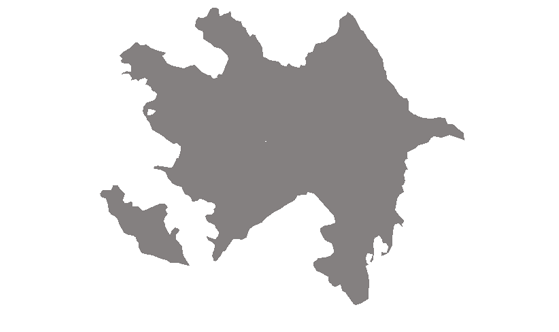
Azerbaijan said it had thwarted a plot linked to the IRGC to attack several targets inside the country.
According to a statement from Azerbaijans State Security Service released late on March 6, the alleged plan included attacks on the Baku-Tbilisi-Ceyhan (BTC) oil pipeline, the Israeli Embassy in Baku, an Ashkenazi synagogue, and a prominent member of Azerbaijan's Mountain Jewish community.